
钢铁侠3
How technology boosts Beijing's air pollution governance_我的网站

A | 10月25日,由省委组织部举办的第十六期“辽宁振兴大讲堂”开讲,抚顺市设分课堂,同步举办“抚顺振兴讲坛”。市委常委,市人大常委会、市政府、市政协领导班子成员出席。

B |
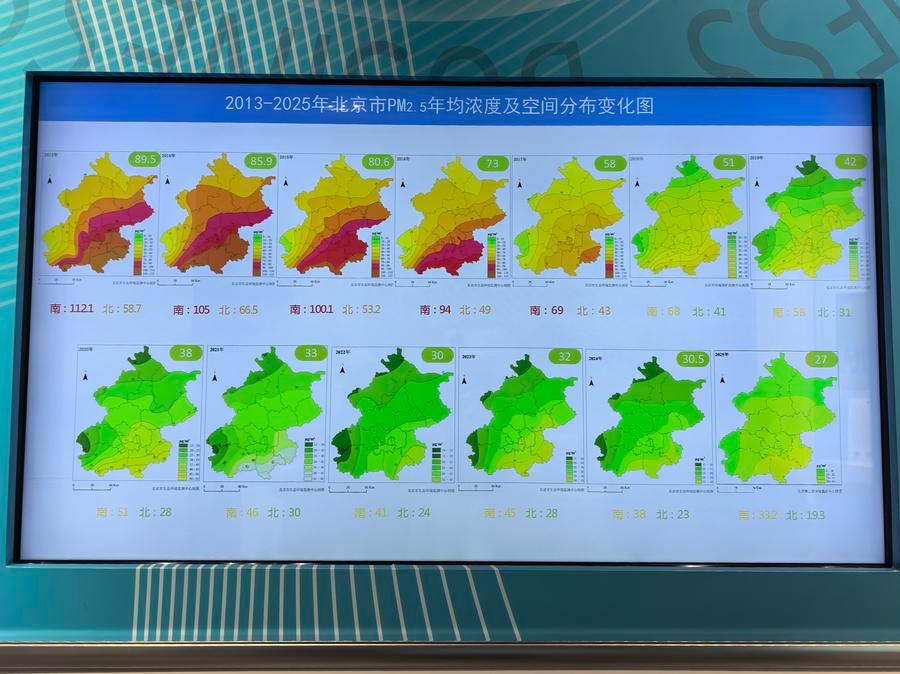
In 2025, Beijing recorded 311 days with good air quality and only one heavily polluted day, compared with 58 heavily polluted days in 2013, when the city officially began releasing PM2.5 monitoring data. The annual average PM2.5 concentration, a key indicator of air quality, fell from 89.5 micrograms per cubic meter in 2013 to 27 micrograms per cubic meter in 2025, a decline of nearly 70 percent.
The progress has drawn international attention. The United Nations Environment Programme has highlighted Beijing's experience in improving air quality as a model for other cities.
According to experts at the Beijing Municipal Ecological and Environmental Monitoring Center, the cleaner air is the result of a comprehensive system integrating environmental monitoring, scientific analysis, policymaking, regional cooperation and law enforcement -- with digital technologies now woven into every link of that chain.
MORE TARGETED APPROACH
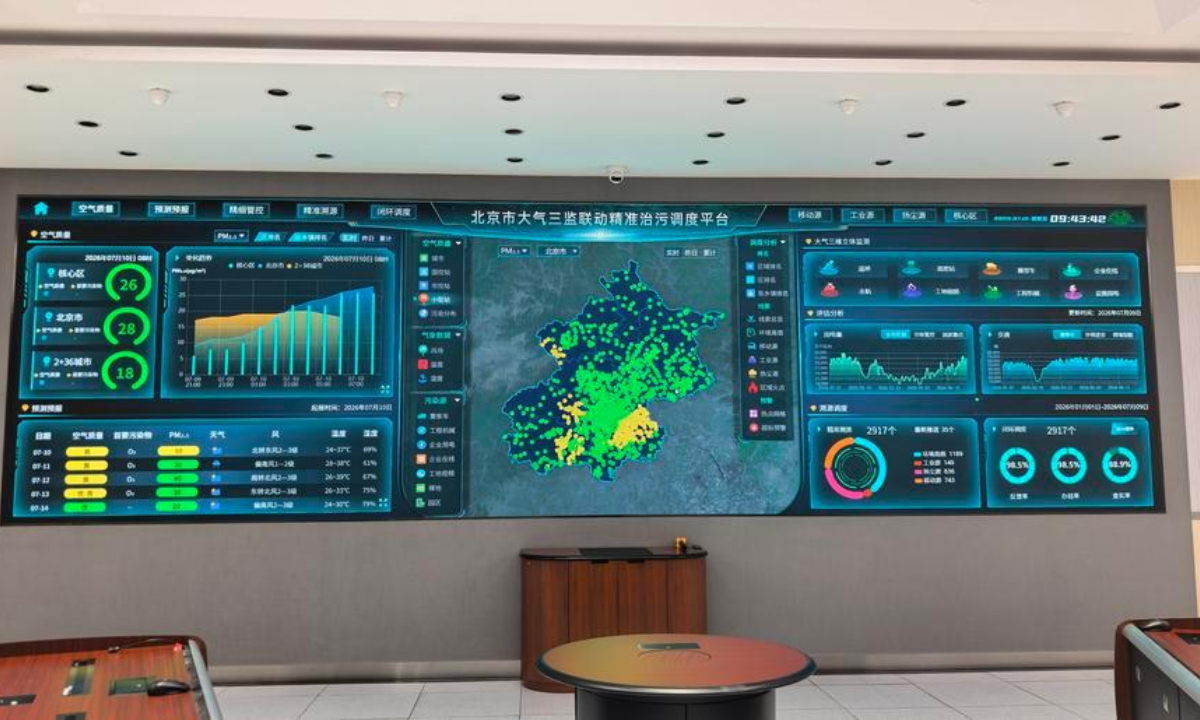
Effective governance begins with accurate monitoring. Beijing has established a multi-level air-quality monitoring network. Figures show 35 standard monitoring stations across the city continuously measure six major pollutants, while more than 1,000 compact sensors deployed across communities and townships provide more detailed information on local air-quality variations.
The monitoring system was gradually built by the Beijing Municipal Ecological and Environmental Monitoring Center, one of China's earliest ecological and environmental monitoring institutions, responsible for monitoring Beijing's air, water, noise, soil environments and ecosystems.
The center has developed an analytical system that can identify around 125 components of PM2.5, covering most of its composition and helping researchers trace pollution sources.
"Source analysis helps us identify the major contributors to pollution at different stages, providing a scientific basis for policymakers to target key emission sources," said Li Yunting, technical director at the center.
Coordinated by the Beijing Municipal Ecology and Environment Bureau, the center has conducted four rounds of PM2.5 source analysis studies with other institutions, with results released in 2014, 2018, 2021 and 2025.
The latest analysis showed that regional transport contributed 57 percent of Beijing's PM2.5 pollution. Among local sources that accounted for the remaining 43 percent, vehicle emissions and residential sources represented the largest share of pollution, a distinctive characteristic of a major international metropolis.
The monitoring results have provided scientific support for a series of pollution-control measures. For example, Beijing has promoted new-energy vehicles to reduce transport emissions and adopted advanced techniques, including air-supported membrane structures, to control dust emissions. Meanwhile, coal combustion pollution, once a major contributor, has almost been eliminated and is no longer listed among the main sources, reflecting broader national efforts to reduce coal consumption, promote clean energy and upgrade heavily polluting industries.
With PM2.5 concentrations now at relatively low levels, further gains in air quality will depend on more targeted, science-driven approaches.
SMARTER ENVIRONMENTAL GOVERNANCE
Beyond monitoring pollution, Beijing has built a data-driven environmental governance system that links monitoring, regulation and enforcement in a closed loop from detection to action and follow-up evaluation.
Developed by the center and known as the innovative regulation-monitoring-inspection linkage model, the system integrates artificial intelligence, the Internet of Things, satellite remote sensing and vehicle-mounted monitoring technologies to pull together environmental data from multiple sources onto a unified platform.
"The system brings information that was once scattered across different departments onto a single platform," said Zhang Likun, director of the smart system division at the center, adding that this enables off-site enforcement and joint cross-sector actions involving housing, water resources and transportation, significantly improving the efficiency and precision of environmental management.
Using more than 30 intelligent algorithms, the platform automatically analyzes data and identifies potential pollution risks, based on which monitoring staff identify the most pressing problems and forward them to enforcement departments.
The approach has already drawn international attention. Clean Air Asia, an international nongovernmental organization focused on improving air quality across Asia, featured the system as a representative case study in its "China Air 2025" report. The model was also presented at the 2026 Better Air Quality Conference and recognized with the Certificate for Clean Air Best Practice Sharing.
China has integrated ecological conservation into its modernization drive. As the country speeds up efforts under the Beautiful China Initiative, Beijing's experience demonstrates how technology can support more precise, coordinated and sustainable environmental governance.
。 大讲堂邀请浙江省委党校经济学教研部主任白小虎作了主题为《以浙江为例,如何发展民营经济》的讲座。白小虎紧紧围绕高质量发展史民营经济的时代课题、认识和把握民营经济高质量发展的规律、推动民营经济高质量发展的关键着力点等主题进行了深入浅出的讲解。讲座主题鲜明、内涵丰富,既有精辟严密的理论阐述,又有实践层面的深入思考,体现了理论与实践的深度结合。 与会人员表示,要深入学习贯彻习近平总书记关于民营经济发展的重要论述,切实把思想和行动统一到党中央和省委决策部署上来,全力冲刺四季度,努力完成全年经济社会发展目标,坚决打赢攻坚之年攻坚之战。将以此次讲座为契机,今后在工作中将运用好本次讲座的学习成果,以昂扬饱满的精神状态、务实高效的工作作风,为抚顺的发展不断注入新的活力和动力。 各县区、市直相关部门、乡镇(街道)主要负责同志、市派招商引资工作小组的200余人参加。 责任编辑:李丹。
Current article:http://yay3.dangnichuaitongjuanye.pics/snk/t2r.html
Published on:22:43:14
我的网站最近更新
- 国补提前结束?官方回应来了:国补政策什么时候结束?结束时间2025年12月31日截止
- 飞鹤六大自主自研乳蛋白原料首发 张旭光:为中国蛋白营养造一颗自己的 “芯”
- 5月30日晚8点京东618超级补贴日重磅开启,补贴优惠力度前所未有,每人每天补贴超6180元!
- Singapore PM shares tips for learning Chinese
- 英超过人王再战西甲!罗马诺:特劳雷今日将接受体检并签约拉科
- 美国对中国电动车关税或从25%提升到100%,放弃美国又何妨?
- China's service exports rise 17.6% in H1, travel services lead growth
- 周密部署筑防线 平稳度汛保安全
- 总体平稳 向新向优——透视前7个月国民经济数据
- 济南:乘风而起的“新新三样”
- Vaa Vaathiyaar Hit With Court Stay a Day Before Release
- 比音勒芬全国青少年高尔夫锦标赛开赛,跨界沙龙赋能青少年成长
- 紧急关注!比新冠更凶猛?H5N1禽流感:死亡率直逼52%,我们如何预防可能的大流行?
- Amazon seller conference unveils plan to boost overseas expansion of local industrial belts
- 财经慧说丨机器人“超级周”,来了
- 妊娠発表から2カ月〝今限定デニム〟マタニティコーデの藤田ニコルに驚き「どうやって履いて…?」「あっという間に大きくなっている!!」
- 博涅克:罗马争冠?目前国米依然是意甲最强队 马伦价值8000万欧
- यात्रीगण कृपया ध्यान दें! सितंबर में छह दिन रद रहेगी मौर्या एक्सप्रेस, क्या है इसकी वजह?
- 济南黄岗路黄河隧道通车,济南籍9座(含)以下小客车免费通行
- 减少铝材依赖 保时捷柏林之声400W低音炮将用上氮化镓
- 13日0时至15时 北京新增本土新冠肺炎病毒感染者16例
- 【观点】南华期货:黄大豆一号多空博弈焦灼,关注减产预期
- Upcoming Hollywood Movies Releasing in December 2025: Avatar: Fire and Ash and More
- “行业洞察”:创新引领潮流!各大运动服饰品牌布局新加坡概念店
我的网站热门资讯
- 奥克兰人要疯!公共交通还要涨价或削减服务,地税也可能更高!
- 人形机器人不缺身体,想找一份工作
- “行走的办事大厅”错峰服务解民忧 北山街道开启“政务夜市”
- 长七A火箭测发周期再缩6天 为高密度发射提前准备_测试_工作
- “易中天”二季度赚更多!股东榜透露重要信息
- 中航西飞:上半年归母净利润4.9亿元,同比下降28.91%
- 广东男篮新增注册张文逸 双方续签一年C类合同
- 如何突破舒适圈,这家公司有看点!| 1106 张博划重点
- 淘宝闪购
- 北京自19-20赛季后首次晋级四强,与山西时隔13年再约半决赛
- “大的要来了”:小米玄戒芯片新进展今天公布,消息称预计会同步官宣首款新机
- 【速報】「XG」プロデューサーのSIMON容疑者を違法薬物に関与した疑いで逮捕 警視庁
- 共享机遇、寻求共同利益:新加坡国际仲裁中心享誉全球
- 1至7月我国全行业对外直接投资同比增长2.8%
- 热身赛:末节23-11!中国女篮逆转双杀尼日利亚 张子宇23+13
- 2026金球奖悬念渐消?凯恩57%遥遥领先,数据与荣誉的完美闭环
- 辽宁省总工会发布23项暖“新”清单
- 市委召开全市经济运行座谈会
- 国会议员薪酬普涨 反对党呼吁优先给工人加薪
- 4战全胜杀入半决赛!这支中国男篮闯入世界杯
- 路径有变!强台风“沙德尔”登陆浙江概率上升,温州、台州、丽水局地将有特大暴雨,杭州风雨最强时段集中在这天
- Jimmy Buffett, "Margaritaville" singer, dies at 76
- 国产《古神风里希》登科隆!巨物神似"金箍棒"
- 민주당, '장동혁 취임 1주년'에 "남은 건 극우 선동과 윤어게인 뿐"